
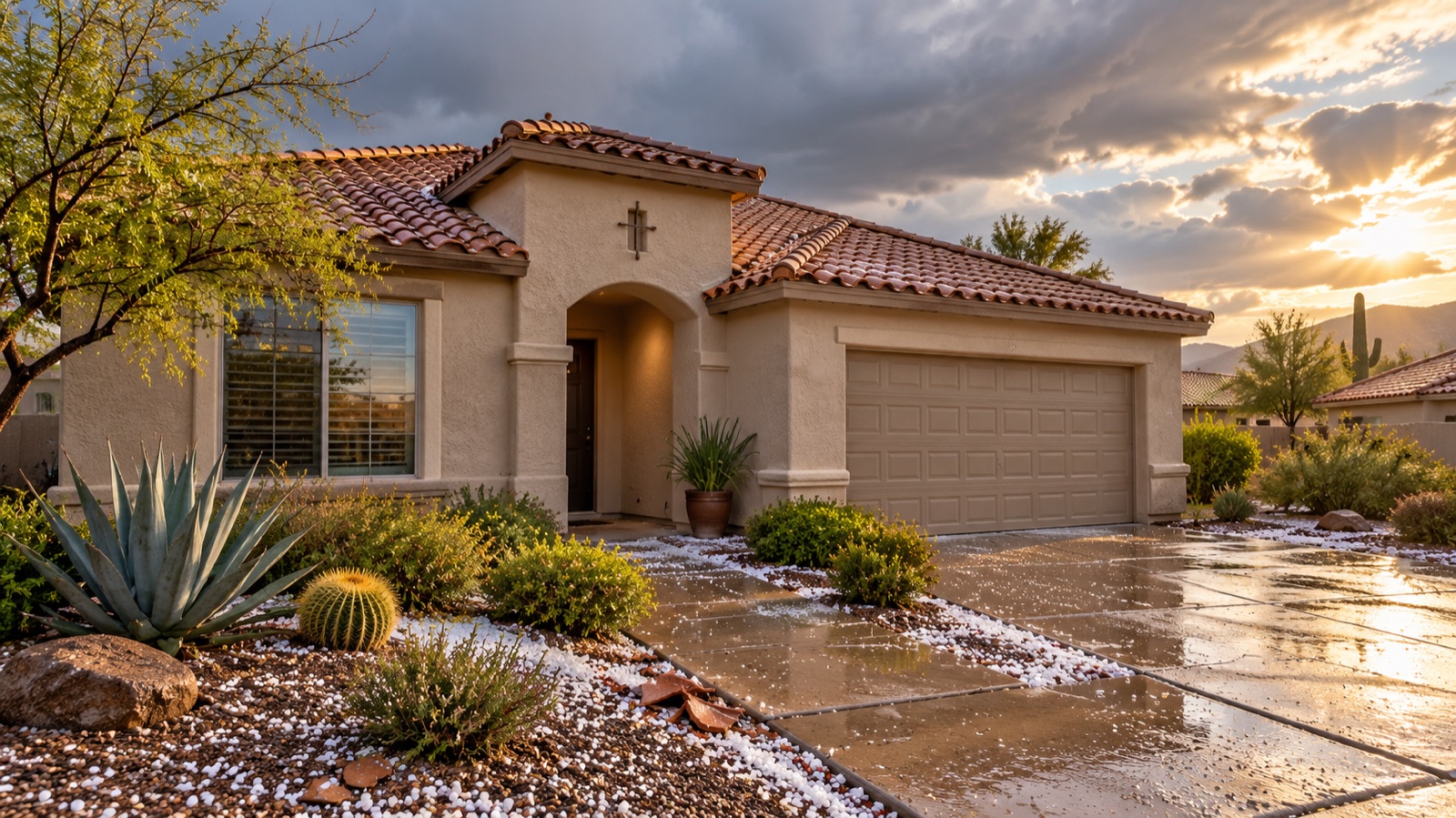
That sound on the roof was hard to miss. When hail starts bouncing across the patio in Arizona, most of us stop what we’re doing and look outside. Once it melts and the sky clears, though, it’s tempting to get back to the day without another thought.
If your East Valley home was in the storm’s path, take a moment to consider what it left behind. You may find nothing concerning. You may notice a damaged screen, roofing debris, or a ceiling stain that wasn’t there before. The goal is to understand your home’s condition and address any problems before another rain tests them.
Start With What You Can See From the Ground
You don’t need to climb onto your roof to begin checking your property. Once conditions are safe, walk around your home and look for changes you can photograph from ground level.
- Broken or displaced roofing materials visible from below
- Roofing fragments or other unfamiliar debris around the home
- New dents or damage on gutters, downspouts, or exterior metal surfaces
- Damaged window screens, cracked glass, or damaged exterior openings
- Water marks or damp areas around windows and doors
These observations can help you explain your concerns to a professional. They do not establish how much roof damage occurred, whether hail caused every mark, or whether a replacement is needed. Avoid climbing ladders, walking on wet roofing, or attempting repairs in unsafe conditions.
Look Inside, Too
The outside of your home tells only part of the story. Pay attention to new ceiling discoloration, damp drywall, bubbling paint, or water appearing near windows after the storm.
An indoor stain doesn’t identify the source by itself. Water may travel before becoming visible, so the spot you notice might be some distance from the opening that allowed it in. National First Response’s water damage restoration services include moisture assessment, drying, and repairs when water has affected the home.
If water is actively entering, don’t wait for another storm to confirm there is a problem. Keep clear of damaged ceilings and electrical hazards, and call for help rather than relying on an online request for an urgent response.
A Tile Roof Still Deserves a Closer Look
Tile roofs are a familiar part of neighborhoods across Mesa, Gilbert, Chandler, and Tempe. From the driveway, however, you cannot see every tile, roof connection, or potential entry point for water.
If you notice broken materials, visible changes, or signs of a leak, a professional assessment can help identify what needs attention. The useful question is not simply whether your roof looks intact from the street. It is whether the roof and surrounding components are continuing to protect your home.
For an active leak or exposed roof area, NFR provides emergency roofing services, including temporary protection and roof repair. The response should fit the condition of the property, rather than start with an assumption about the size of the job.
Hail Doesn’t Automatically Mean an Insurance Claim
A loud storm can leave you wondering whether you should call your insurance company immediately. Hearing hail, finding a dent, and understanding the full extent of property damage are different things.
Start by documenting what you can safely see and getting a clear explanation of any damage found. An assessment can help you understand the likely work involved and decide what questions to discuss with your insurer. Coverage and payment decisions remain with the insurance company under your policy.
NFR’s approach starts with understanding the property and explaining the next step. That may involve repairs, emergency protection, further investigation, or documentation to support an insurance conversation. There should be a reason for the recommendation, not an automatic push toward a claim.
Think Beyond the Roof Repair
When a storm allows water inside, recovery may involve more than fixing the entry point. Wet materials may need drying, moisture levels may need monitoring, and damaged finishes may need repair.
National First Response’s storm damage restoration services connect emergency protection, damage assessment, drying, and reconstruction. Having those steps coordinated helps homeowners understand what happens next and who is responsible for the work.
Not Sure What the Hail Left Behind? Let’s Take a Look.
You don’t have to diagnose a roofing problem from your driveway or wait for a ceiling stain to grow before asking questions. If something looks different after the storm, National First Response can help you understand the condition of your property and the next practical step.
Request a free damage assessment for a concern that can be scheduled. For active leaking or urgent storm damage, call National First Response for 24/7 emergency help.
Frequently Asked Questions
Can my roof have hail damage without an immediate leak?
Yes. Visible material damage and an active leak do not always appear together. The absence of indoor dripping does not establish that every part of the roof is undamaged. If you see changes after a storm, a professional assessment can help determine whether repairs are needed.
Should I climb onto my roof to check for hail damage?
No. Begin with observations and photographs from a safe location on the ground. Leave roof access and close inspection to qualified professionals, particularly when materials are wet, damaged, or unstable.
Does finding hail damage mean I need a new roof?
Not necessarily. The appropriate work depends on the roofing materials, the extent and location of damage, and the overall condition of the roof. An inspection should establish those facts before anyone recommends repairs or replacement.
Dealing with damage right now?
Get certified help onsite within the hour.
Call National First Response 24/7: we stop the damage, document everything, and bill your insurance directly.