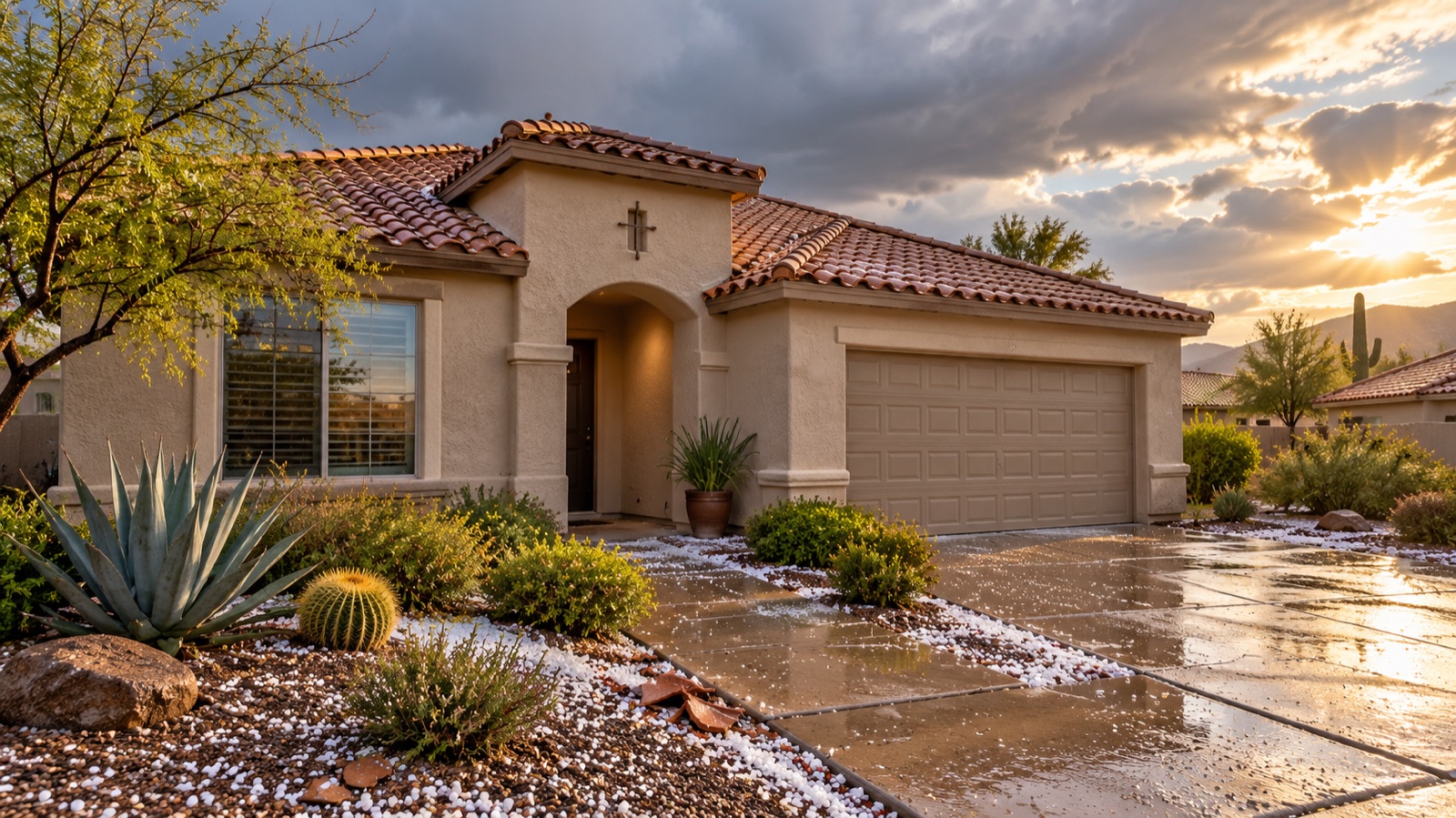
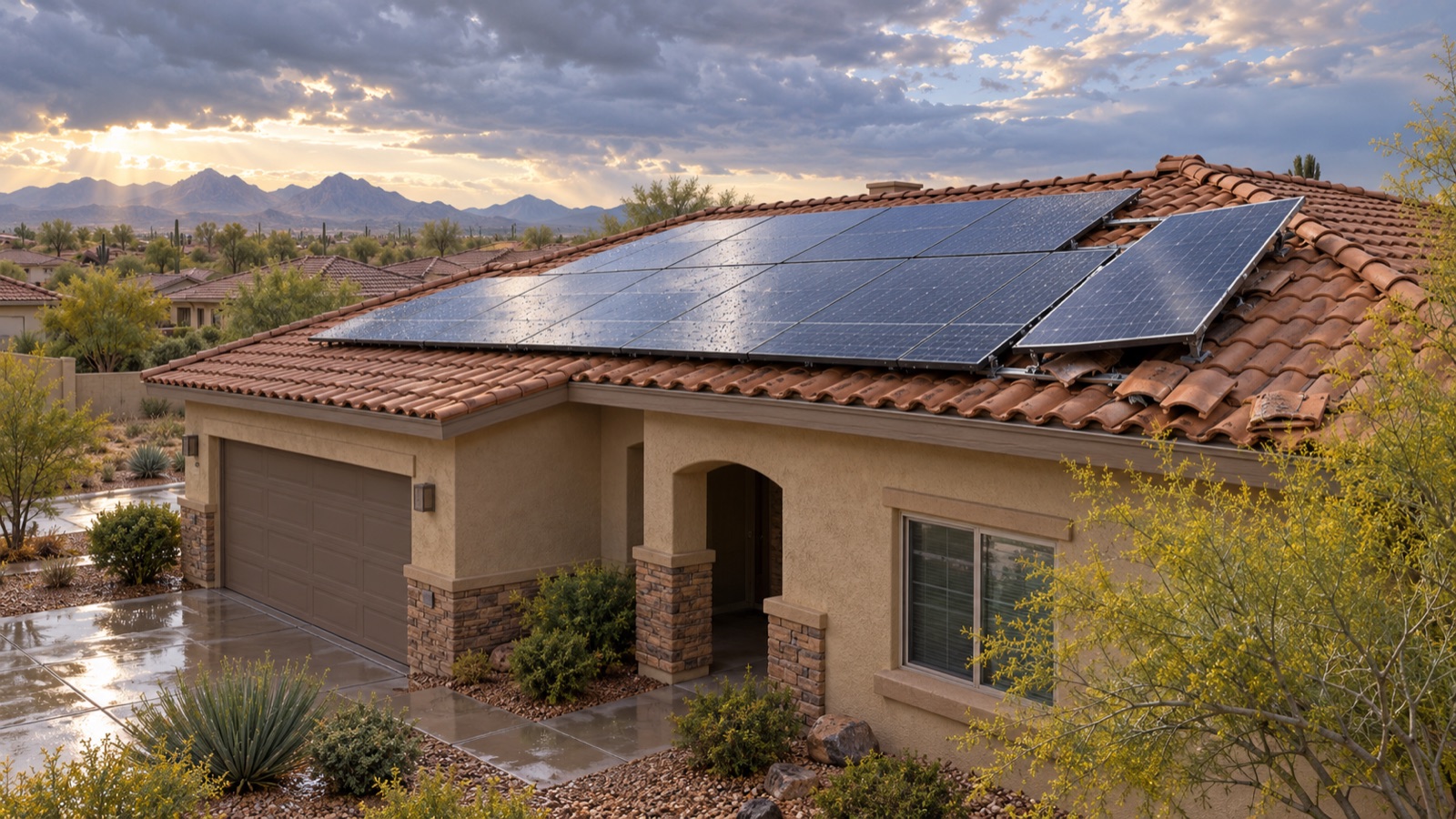
A solar panel was partially detached and hanging from the roof. An AC condensate line had pulled loose. After a powerful microburst moved through Mesa’s Marlborough Mesa neighborhood, the homeowner had concerns about what else might have happened overhead.
She needed help understanding the damage and deciding who should address it.
National First Response scheduled an inspection for the following day. What followed was a relatively small project with an important outcome: the homeowner received documentation and guidance, then worked with her original roofer to resolve the concerns.
NFR’s contribution was the inspection and the direction it provided. The original roofing company performed the repairs.
First, Find Out What the Storm Left Behind
The partially detached panel was the most obvious concern. The displaced condensate line and possible damage around the roof also needed a closer look.
Before arriving, NFR Foreman Seth Coburn called the homeowner with an estimated arrival time of 30 minutes. At the property, he inspected and photographed the affected roof area, solar panel, displaced line, and other visible conditions.
That documentation gave the homeowner a record of what NFR observed. It also provided information she could share with the contractor evaluating the repairs.
An inspection is an important part of storm damage restoration. Before deciding what work to authorize, homeowners need an explanation of the conditions found and the next steps those findings support.
A Two-Year-Old Roof Changed the Conversation
During the assessment, one detail mattered: the roof was approximately two years old.
That made the original roofing company a sensible place to start. NFR recommended contacting that contractor to explore whether an existing warranty might apply and to discuss responsibility for the necessary repairs.
This was a recommendation to investigate a possible repair path. It was not a guarantee of coverage or a conclusion that the original installation caused the storm damage.
For the homeowner, it meant there was another option to explore before hiring a separate company for the work.
The Homeowner’s Original Roofer Completed the Repairs
The homeowner later reported that her original roofer had addressed the roof, solar-panel, and condensate-line concerns. NFR’s case was closed on August 17, 2026.
National First Response did not perform those repairs. Its role was to inspect, photograph, and help the homeowner identify a practical next step.
That distinction is central to this case. The value NFR provided came from helping the homeowner understand her options and directing her toward the contractor best positioned to address the concerns.
Useful Documentation, Even Without an Insurance Claim
According to the case summary, the concerns were resolved through the original roofer without an insurance claim being opened.
That does not mean every homeowner with similar damage should take the same path. Each property, repair scope, warranty, and insurance policy is different.
It does show why documenting the condition can be useful before making decisions. Photographs and inspection notes can support a conversation with an existing contractor, help explain a repair concern, or provide a record if further evaluation is needed.
In this case, the documentation served a purpose even though NFR did not undertake a restoration project.
Helping the Homeowner Make the Right Call
Storm damage can leave homeowners facing several unfamiliar decisions at once. Does the property need immediate protection? Who should inspect it? Should the original contractor be involved? What work is actually necessary?
This Mesa project illustrates the approach behind NFR’s Right Call Guarantee: begin by understanding the situation and explaining the options.
Sometimes that leads to emergency protection, repairs, or broader restoration. Here, it led the homeowner back to her original roofer.
Helping someone reach that answer is a meaningful outcome.
Have Questions About Roof Damage After a Storm?
If a storm leaves something loose, displaced, or visibly damaged, National First Response can help assess the situation and explain the next step.
NFR’s emergency roofing services include temporary protection and roof repairs when the property requires them. The appropriate response depends on the conditions found.
Contact National First Response to discuss a storm damage concern. For an active emergency, use the emergency calling option on the website rather than waiting for an online form response.
Frequently Asked Questions
Did National First Response repair the roof and solar panel in this case?
No. NFR inspected the property, photographed the visible conditions, and recommended that the homeowner contact her original roofing company. The homeowner later reported that the original roofer addressed the repair concerns.
Were the repairs covered by a roof warranty?
NFR recommended exploring possible warranty assistance because the roof was approximately two years old. The available handoff does not establish the final warranty terms or payment arrangement, so this case study does not describe the repairs as confirmed warranty-covered work.
Does a storm damage inspection always lead to an insurance claim?
No. In this case, the homeowner’s original roofer addressed the concerns without an insurance claim being opened, according to the project summary. An inspection helps document the property’s condition; the next step depends on the findings and the homeowner’s circumstances.
Why contact the original roofer after storm damage?
For a relatively recent roof, the original contractor may have useful installation records and warranty information. Contacting that company can help establish what assistance may be available. Any warranty responsibility depends on the applicable terms and the circumstances of the damage.
Dealing with damage right now?
Get certified help onsite within the hour.
Call National First Response 24/7: we stop the damage, document everything, and bill your insurance directly.