The leak has stopped, the restoration crew has arrived, and drying equipment is moving into your house. Then a practical question hits: Where are you supposed to sleep tonight?
If the damage is in the kitchen, can you still make breakfast? If the hallway flooring is coming out, can your children get to their bedrooms? And how much noise will those machines make while you are trying to work?
Sometimes homeowners can remain in an unaffected part of the house during water damage restoration. Other situations require temporary relocation. The decision depends on the conditions inside the property, the work ahead, and the needs of the people living there.
Start With Safety Before Convenience
A room that looks usable is not necessarily ready to occupy. Before deciding to stay, the property needs an assessment of the damage, potential hazards, and areas that must remain off-limits.
Standing water near electrical systems and signs of structural instability require particular caution. EPA guidance advises against entering a flood-damaged building with signs of structural damage until a qualified professional has verified that it is safe to enter. US EPA
National First Response’s water damage restoration services include assessment, water removal, structural drying, and moisture monitoring. Those findings help guide the work and the conversation about which spaces may remain usable.
Follow any evacuation or restricted-access instructions. Being allowed to retrieve belongings is different from being cleared to live in the home.
The Source and Extent of the Water Matter
A localized plumbing leak and widespread flooding can create very different restoration needs. The source of the water, the materials affected, and how far moisture traveled all influence the plan.
Water may extend beyond the spot where you first noticed it. Flooring, wall cavities, cabinets, and adjoining rooms may need investigation even when the visible damage appears contained.
Ask your restoration team to explain the affected area and whether the work can be separated from occupied spaces. An unaffected bedroom alone does not answer the question if reaching it means walking through a restricted work area.
Can Your Household Still Use the Essentials?
Once safety has been addressed, consider whether the home can support everyday life.
A family in Mesa might have access to bedrooms but lose the only working bathroom. A homeowner in Tempe might have a usable bathroom while the kitchen remains inaccessible. Both situations require a different plan than damage limited to a spare room.
Before deciding to stay, discuss these questions with your project manager:
- Which rooms and routes through the house can we use?
- Will we have a functioning bathroom, safe drinking water, and somewhere to prepare food?
- Will electricity, plumbing, or air conditioning be interrupted?
- What work areas must remain separated from children and pets?
- Could the occupancy plan change during demolition or repairs?
The answers should reflect the actual project. They may also change as additional damage is uncovered.
Drying Equipment Changes the Feel of the House
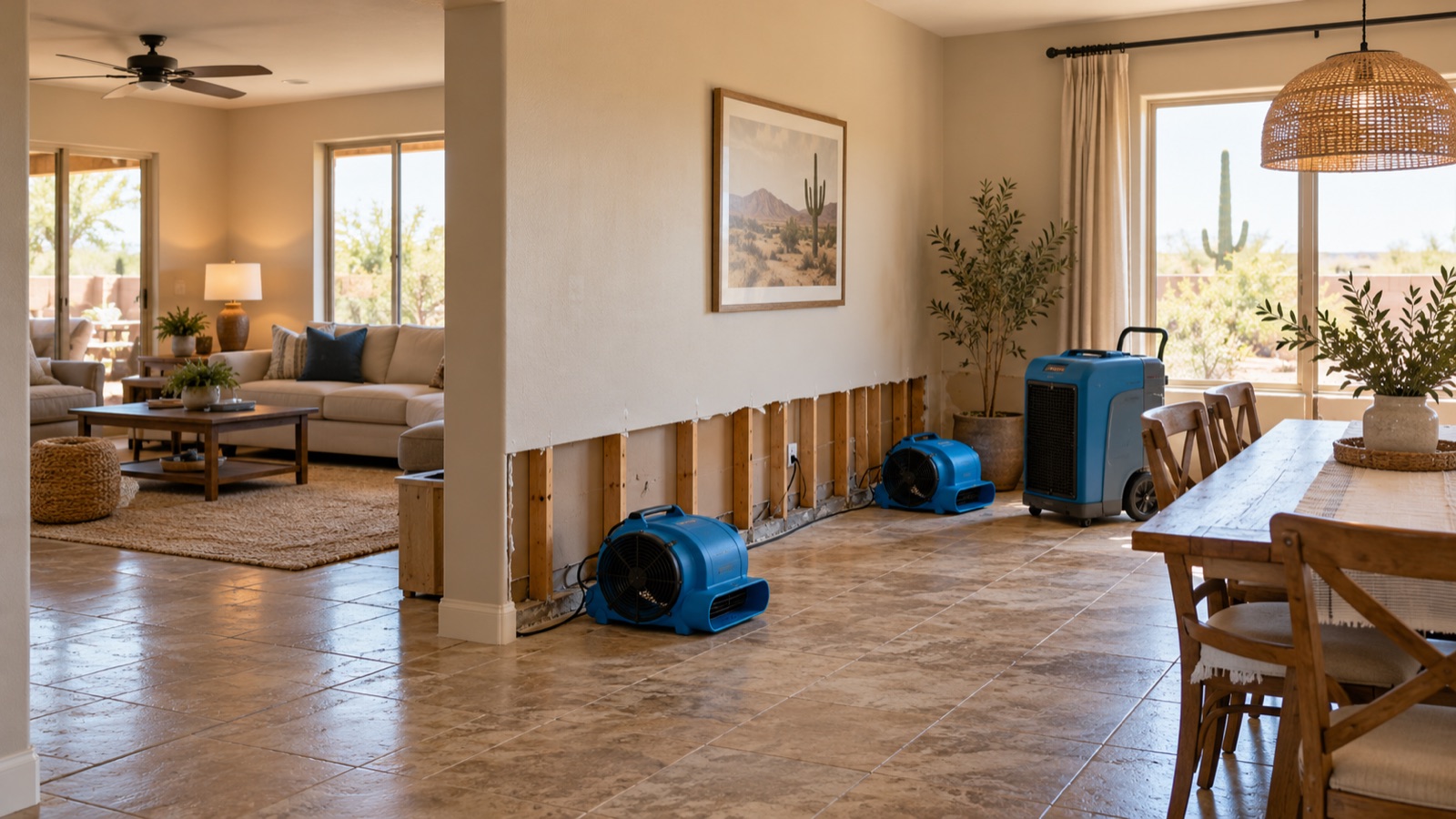
Professional drying can make a familiar room feel very different. Air movers and dehumidifiers take up space, generate noise, and may make nearby areas feel warmer.
That matters when a bedroom is close to the equipment or someone works from home. A setup that is manageable for an afternoon may be difficult to live around overnight.
Ask the crew what equipment needs to operate, how long it is expected to remain, and what access technicians will need for monitoring. Do not unplug, move, or adjust equipment without their direction. If noise or access becomes a problem, discuss it with the team so they can explain the available options.
Children, Pets, and Health Needs Deserve Their Own Plan
Think about how your household will actually move through the space. Young children may not understand why a room is off-limits. Pets may be unsettled by equipment, unfamiliar workers, or frequent door openings.
Tell your project manager about mobility limitations, medical equipment, and other needs that could affect access or temporary arrangements.
If mold is present or suspected, health considerations also matter. The CDC notes that people with asthma, mold allergies, weakened immune systems, or chronic lung conditions can face greater risks from mold exposure. Discuss individual health concerns with a healthcare professional when deciding whether to remain in the property. CDC
A containment barrier or an open window should not be treated as proof that occupancy is appropriate.
The Plan May Change Between Drying and Repairs
The removal of drying equipment does not necessarily mean the entire home is ready for normal use.
The next stage may involve flooring removal, drywall work, cabinetry, painting, or temporary utility interruptions. A room that was accessible during drying may need to close during reconstruction.
Our guide to the complete property restoration process explains how assessment, mitigation, repairs, and the final walkthrough connect.
Ask for an occupancy update when the project moves into a new phase. Planning around the next few days is more useful than assuming the first arrangement will work through completion.
Get a Clear Plan for Your Home
You should not have to guess whether you can sleep in your house tonight or use your kitchen tomorrow.
National First Response helps Arizona property owners understand the damage and the work ahead. Contact the team to discuss your situation, including access, household needs, and questions about staying during restoration. For active water damage or an urgent situation, call 480-405-5596.
The goal is a practical plan based on your property and the people who call it home.
Frequently Asked Questions
Can I sleep in my house while drying equipment is running?
Possibly, but equipment operating in the home does not establish that sleeping there is appropriate. The decision depends on assessed conditions, access to unaffected sleeping areas, necessary utilities, and household needs. Confirm the occupancy plan with your restoration team before staying overnight.
Can I turn off the drying equipment at night?
Do not turn off or adjust restoration equipment without instructions from the crew. The equipment is part of a drying plan, and interruptions can affect progress. If the noise prevents sleep, tell your project manager so you can discuss arrangements that support both the work and your household.
Does staying somewhere else mean the damage is especially severe?
Not necessarily. Temporary relocation may be practical because the only bathroom is unavailable, essential utilities are interrupted, or work areas cannot be separated from living spaces. The decision should reflect the conditions and work involved rather than assumptions about the size of the loss.
When can we return to normal use of the house?
Ask your project team which areas are ready for use and which restrictions remain. Drying, cleanup, and building repairs have different completion points. The removal of equipment or an improved appearance alone does not confirm that every room is ready to occupy.
Dealing with damage right now?
Get certified help onsite within the hour.
Call National First Response 24/7: we stop the damage, document everything, and bill your insurance directly.