
480-566-9440
Water Damage Extraction: What It Is, How It Works, and Why Speed Matters
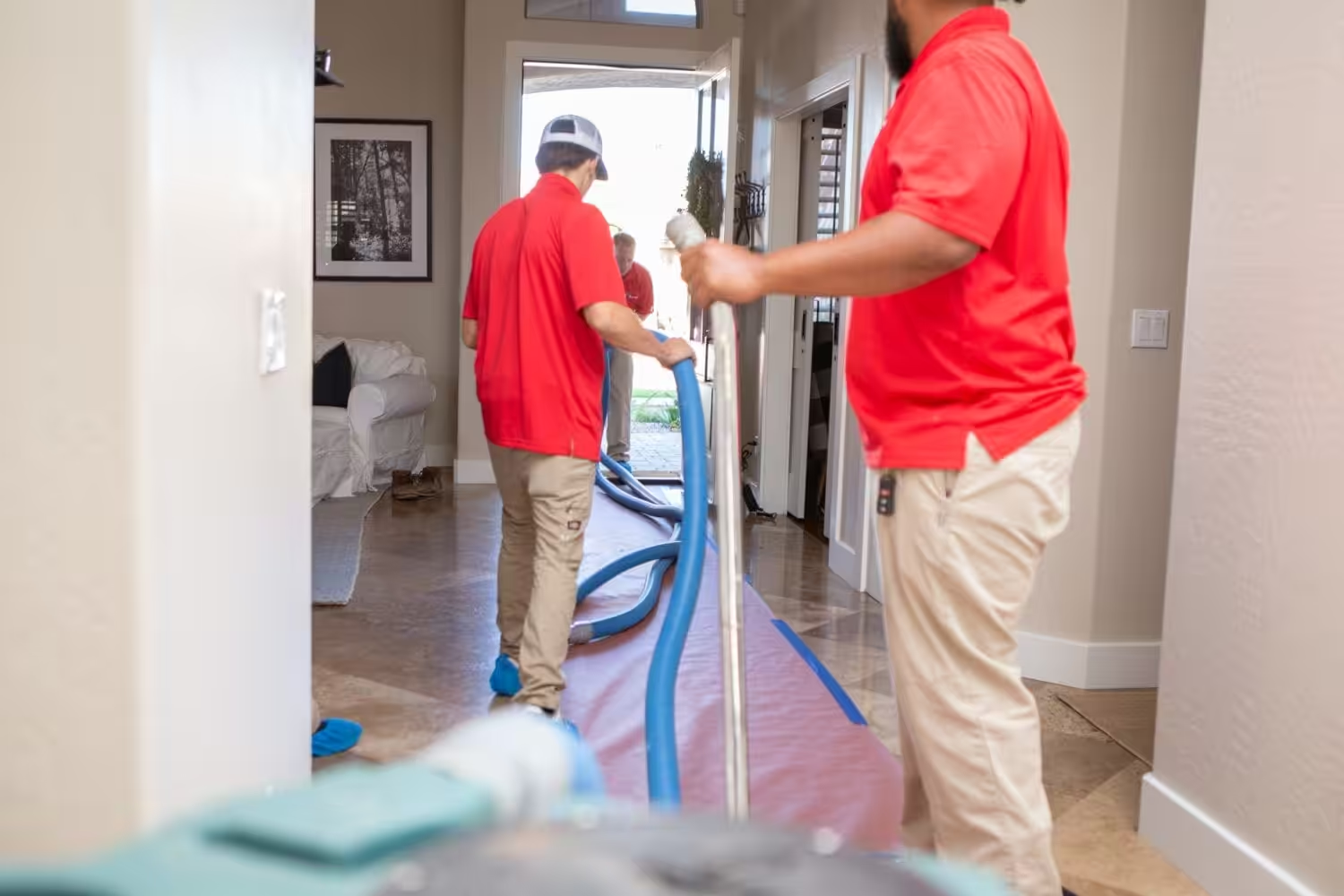
Water damage extraction is the professional removal of standing water and trapped moisture after a leak, flood, burst pipe, appliance failure, or storm. The purpose is to stabilize the structure, prevent material deterioration, and prepare the property for controlled drying.
Fast extraction reduces structural damage, limits mold risk, protects contents, and shortens the overall restoration timeline. In Arizona, heat and enclosed building conditions can intensify humidity inside walls and flooring, making immediate water removal critical for both homes and commercial properties.
What Is Water Damage Extraction?
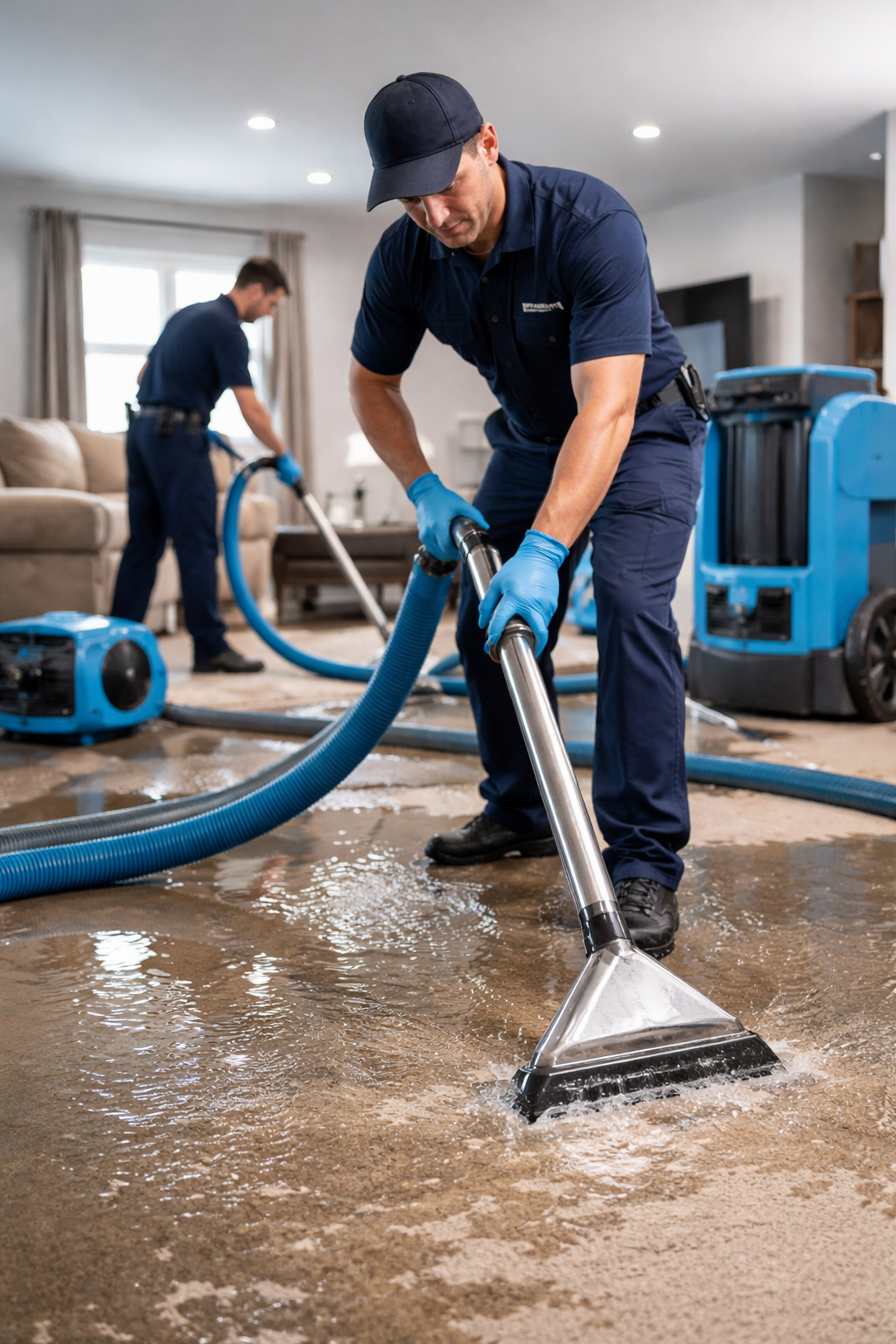
Water damage extraction is the process of removing standing water from a property using high-capacity pumps, truck-mounted extraction units, and specialized vacuum tools. It is the first step in water mitigation and is performed to stabilize the structure, protect materials, and prepare the space for controlled drying.
Fast extraction limits water migration into flooring, walls, and structural components, reduces the risk of mold growth, and shortens the overall restoration timeline.
When Is Water Extraction Needed?
Water extraction is required when water is:
- Pooling on floors or inside walls
- Saturating carpet, padding, or baseboards
- Entering from roof leaks or plumbing failures
- Affecting multiple rooms or levels
- Present for more than a few hours
Delaying extraction allows water to migrate into subfloors, insulation, and structural cavities, increasing demolition and recovery time.
Water Extraction vs Structural Drying
Water extraction and structural drying are two separate steps in the mitigation process, and both are required for full recovery after water damage.
Water extraction removes standing and pooled water from floors, carpets, and surfaces using pumps and high-suction equipment. This step stabilizes the property and stops water from spreading into additional materials.
Structural drying begins after extraction and focuses on removing hidden moisture from drywall, subfloors, framing, and the air. Air movers, dehumidifiers, and moisture monitoring are used to return materials to dry standards.
Extraction reduces the overall drying time and lowers the risk of mold, material failure, and extended restoration. Drying completes the process by eliminating remaining moisture that cannot be removed through extraction alone.
The Water Damage Extraction Process
1. Safety and source control
Power hazards are identified, the water source is shut off, and the water category is evaluated to determine proper handling.
2. Moisture mapping
Moisture meters and thermal imaging locate both visible and hidden water in flooring, walls, and structural cavities.
3. High-volume water removal
Truck-mounted extraction units and submersible pumps remove standing water quickly to stop further migration.
4. Targeted extraction
Weighted extraction tools pull water from carpet, seams, and padding where moisture is trapped below the surface.
5. Contents protection
Furniture and belongings are elevated, moved, or contained to prevent additional damage during mitigation.
6. Preparation for structural drying
Air movers and dehumidifiers are installed after extraction to remove remaining moisture and bring materials back to dry standards.
How Long Does Water Extraction Take?
Most residential water extraction projects take a few hours once crews are on site. The exact timeline depends on the amount of standing water, the size of the affected area, and whether water has migrated into walls or subfloors.
Large losses, multi-room events, and commercial properties may require phased extraction across multiple zones before drying begins. Drying typically continues for three to five days after extraction depending on materials and environmental conditions.
Why Fast Water Extraction Matters
Immediate extraction:
- Prevents water from spreading into structural materials
- Reduces mold growth risk within the first 24 to 48 hours
- Protects drywall, cabinetry, and flooring
- Lowers total restoration cost
- Shortens business interruption for commercial properties
Waiting even one day can increase demolition needs and extend recovery timelines.
Water Extraction for Commercial Properties
Commercial water damage extraction is planned around operations, tenants, and safety requirements. Work is often phased so sections of the building remain functional. Large-capacity equipment is used for open floor plans, and documentation is provided for facility managers, stakeholders, and insurance carriers.
Dry-in-place strategies are used when materials can be saved to reduce downtime and preserve revenue-producing space.
Water Damage Extraction and Home Insurance Coverage
Homeowners insurance may cover water damage extraction when the loss is sudden and accidental, such as a burst pipe or appliance failure. Coverage depends on the cause of the water, policy conditions, and how quickly mitigation begins. Long-term leaks and maintenance-related issues are typically not included.
National First Response documents the loss in a format your carrier can review and keeps you informed as the claim progresses. Claim-ready reporting includes:
- Photo documentation of affected areas
- Moisture readings and drying progress logs
- Equipment records and placement diagrams
- Itemized scope of work for carrier review
This structured documentation helps your insurance provider understand the extent of the damage and supports a more efficient claims process.
Signs You Need Professional Water Extraction
You should request professional extraction if you notice:
- Water spreading beyond the original source
- Soft, buckling, or swollen flooring
- Water under baseboards or inside walls
- Musty odors after a leak
- Ceiling staining or active dripping
- Sprinkler discharge or supply line failure
These conditions indicate trapped moisture that cannot be removed with household equipment.
Get Help With Water Damage in Arizona
In Phoenix and surrounding areas, rapid response is essential due to heat, building materials, and the risk of trapped humidity inside conditioned spaces. Same-day extraction helps limit damage, protect structural materials, and keep restoration timelines predictable.
National First Response has helped Arizona families restore their homes after water damage since 2008. Licensed, bonded, and insured technicians provide rapid extraction, structured drying, and clear documentation to support the recovery process from the first call through completion.