
480-566-9440
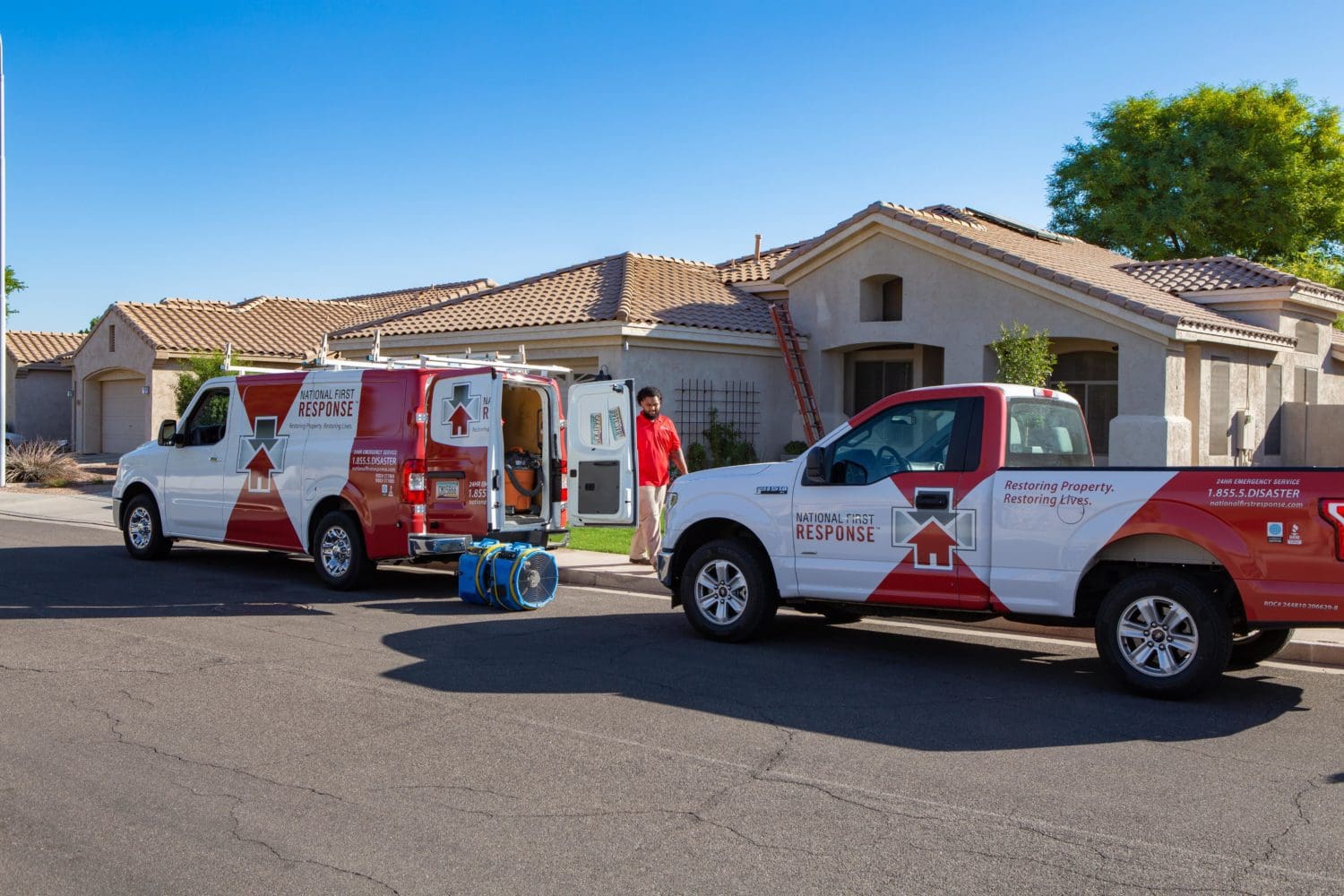
Water Damage Cleanup: What to Do Before Damage Spreads
Water damage can move quickly through a home or business. A burst pipe, leaking water heater, roof leak, overflowing toilet, appliance leak, or storm-related flood can spread into flooring, drywall, baseboards, cabinets, insulation, and structural materials.
Even when the visible water is gone, moisture can stay trapped behind walls, under floors, or inside building materials. If it is not dried correctly, that hidden moisture can lead to mold growth, odors, structural damage, and more expensive repairs.
National First Response provides 24/7 water damage cleanup and restoration services in Mesa, Phoenix, Scottsdale, Chandler, Gilbert, Queen Creek, Ahwatukee, and surrounding Arizona communities. Our team helps remove water, dry affected materials, document the damage, and restore your property after unexpected water damage.
What Is Water Damage Cleanup?
Water damage cleanup is the process of removing water, identifying hidden moisture, drying affected materials, cleaning and sanitizing damaged areas, and restoring the property after a leak, flood, burst pipe, storm, or plumbing failure.
Professional cleanup is important when water reaches drywall, flooring, cabinets, insulation, ceilings, electrical systems, or contaminated areas.
Start With Safety Before Cleaning Up Water Damage
Before you clean up water damage, make sure the area is safe.
Do not enter standing water if it may have reached outlets, wiring, appliances, or an electrical panel. Avoid rooms with sagging ceilings, softened drywall, buckling floors, or visible structural damage.
You should also stay out of the area if the water came from:
- A sewage backup
- A toilet overflow
- Storm flooding
- Groundwater
- A drain backup
- Any source that may contain contaminants
Do not tear out flooring, drywall, or cabinets before the damage has been inspected. Removing materials too soon can make cleanup harder and may affect insurance documentation.
If the area feels unsafe, call a professional water damage restoration company right away.
What You Can Do Right Away
There are a few safe steps you can take while waiting for help.
If possible, stop the water source. This may mean shutting off the water supply to a leaking appliance, burst pipe, toilet, or water heater. If the water is coming from an active plumbing issue, National First Response also provides emergency plumbing service and water damage mitigation support.
Then, if it is safe:
- Move valuables away from wet areas
- Take photos and videos of the damage
- Move small furniture or personal items off wet floors
- Keep people and pets away from affected rooms
- Call a restoration company before moisture spreads further
Avoid using household fans or turning on the HVAC system if mold, sewage, stormwater, or contamination may be involved. Moving air through an unsafe area can spread contaminants or mold spores.
Why Surface Drying Is Not Enough
Water damage cleanup is not just about removing visible water. The bigger issue is often the moisture you cannot see.
Water can soak into:
- Drywall
- Insulation
- Wood framing
- Carpet and padding
- Cabinets
- Baseboards
- Subflooring
- Ceilings
These materials may look dry on the surface while still holding moisture underneath. That is why professional moisture detection, extraction, and structural drying are so important after water damage. Professional restoration standards matter because the IICRC S500 standard outlines procedures and precautions for water damage restoration in residential and commercial properties.
Common Water Damage Cleanup Mistakes to Avoid
Many property owners try to clean up water damage before realizing how far the water has spread. Some small spills can be handled safely, but larger water damage needs more than towels and fans.
Avoid these common mistakes:
- Waiting too long to start cleanup
- Assuming the surface is dry because it looks dry
- Using fans before contamination or mold risk is checked
- Ignoring musty odors
- Pulling out materials before documenting the damage
- Cleaning up sewage or stormwater without proper protection
- Skipping professional moisture detection
The goal is not just to make the area look dry. The goal is to make sure the affected materials are actually dry and safe.
DIY Water Damage Cleanup vs. Professional Restoration
Small amounts of clean water on a hard surface may be cleaned with towels, mops, and ventilation if the area dries completely.
Professional restoration is needed when water spreads into porous materials, hidden spaces, or unsafe areas.
Call a professional water damage cleanup company if water reaches:
- Drywall or baseboards
- Carpet, wood, laminate, or tile flooring
- Cabinets or built-ins
- Ceilings or insulation
- Multiple rooms
- Electrical outlets, wiring, or appliances
- Crawl spaces or wall cavities
- Any area affected by sewage, stormwater, or contamination
National First Response uses moisture detection equipment, water extraction tools, air movers, and industrial dehumidifiers to dry areas that household equipment cannot fully reach. For larger emergencies, our team can also provide full emergency restoration services to help stabilize the property and begin the restoration process.
Why Professional Water Damage Cleanup Matters
Professional water damage cleanup helps reduce the risk of hidden moisture, mold growth, contamination, electrical hazards, and structural damage.
Mold Can Grow in Damp Materials
Mold is one of the most common concerns after water damage. It can grow inside walls, under flooring, behind cabinets, and in insulation when moisture remains trapped.
Fast water extraction and drying help reduce mold risk. If mold is already present, professional mold remediation may be needed.
Electrical Systems May Be Affected
Water and electricity are dangerous together. Water damage can affect outlets, wiring, appliances, panels, and lighting systems.
If water has reached any electrical area, do not enter the space until it has been evaluated.
Contaminated Water Needs Proper Cleanup
Not all water damage comes from a clean source. Sewage, stormwater, groundwater, and drain backups can carry bacteria, waste, chemicals, and other contaminants.
These situations require proper removal, cleaning, sanitizing, and sometimes material disposal.
Structural Materials Can Weaken
Water can damage wood framing, subflooring, ceilings, drywall, and other building materials. Saturated materials may swell, warp, crack, sag, or break down over time.
Professional drying helps protect the structure and reduce the risk of additional repairs.
What Professional Water Damage Cleanup Includes
Professional water damage cleanup is designed to stabilize the property, remove moisture, and prevent further damage.
The process may include:
- Emergency inspection
- Water extraction
- Moisture detection and mapping
- Structural drying
- Air movers and industrial dehumidifiers
- Cleaning and sanitizing
- Odor control
- Damaged material removal when needed
- Mold prevention or mold remediation
- Insurance documentation
- Repairs or reconstruction
Every situation is different. A small plumbing leak may only need targeted drying, while a larger flood may require extraction, sanitizing, demolition, drying, and reconstruction.
Water Damage Cleanup in Mesa, Phoenix, and the Valley
National First Response provides 24/7 water damage cleanup and restoration services throughout Mesa, Phoenix, Scottsdale, Chandler, Gilbert, Queen Creek, Ahwatukee, and surrounding areas.
Our team responds to water damage caused by:
- Burst pipes
- Plumbing leaks
- Water heater failures
- Appliance leaks
- Toilet overflows
- Roof leaks
- Monsoon damage
- Storm flooding
- Emergency plumbing failures
As a full-service restoration company, National First Response can support the process from emergency cleanup through repairs, reconstruction, mold remediation, and insurance coordination. We also provide water damage cleanup in Phoenix and surrounding Valley communities for both residential and commercial properties.
Call National First Response for 24/7 Water Damage Cleanup
When water damage affects your home or business, quick action matters. The sooner cleanup begins, the better chance you have of reducing hidden moisture, mold risk, structural damage, and costly repairs.
National First Response provides emergency water damage cleanup, water extraction, structural drying, mold remediation, and property restoration throughout the Valley.
Call National First Response for fast water damage cleanup in Mesa, Phoenix, and surrounding Arizona communities.
Frequently Asked Questions About Water Damage Cleanup
Editorial Writer - Victoria Yancer
Verum Digital Marketing
Reviewed by - Kevin Cavanaugh
National First Response